
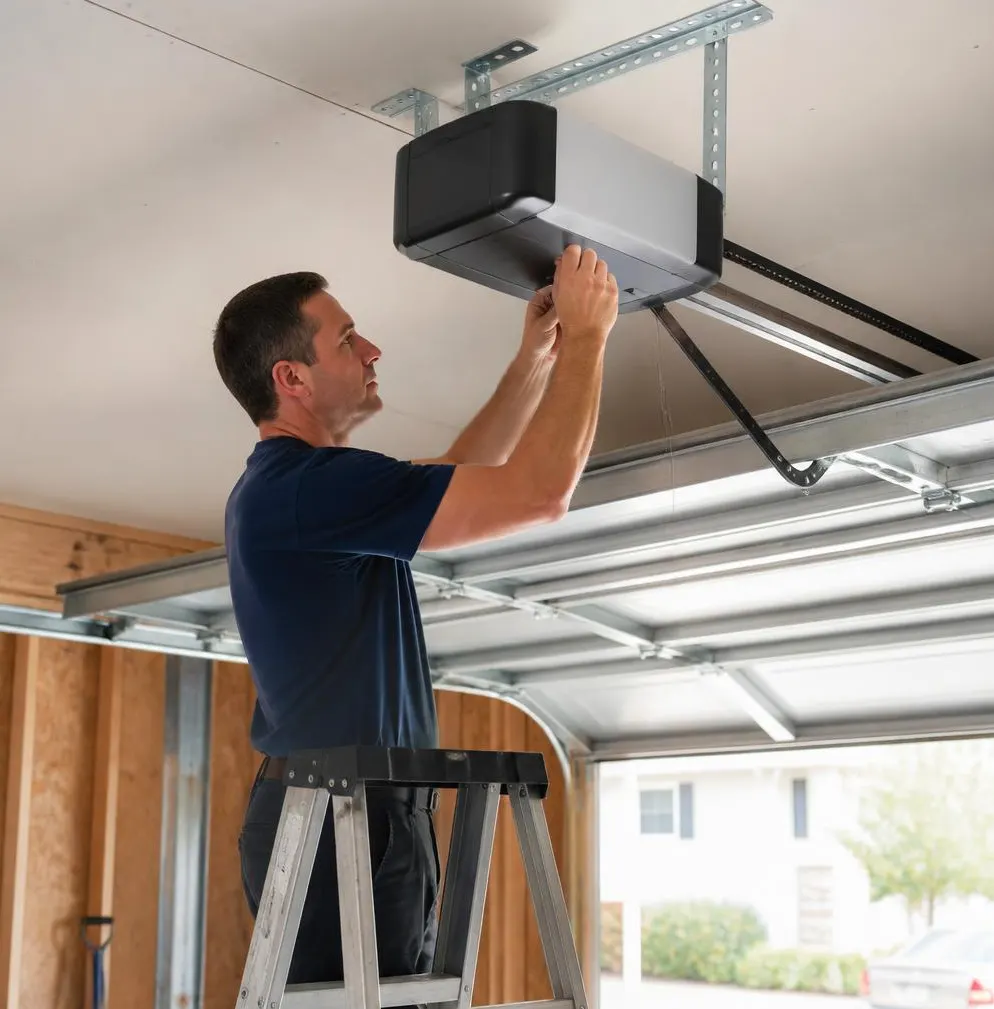
What a Technician Sees This Time of Year
By late October, the calls start to follow a pattern. A homeowner opens the garage on a cold morning and the door groans, jerks, or stops halfway. Or the opener clicks and hums but the door doesn't budge. Sometimes it's a spring that finally gives out after a summer of quiet strain, snapping the first week temperatures drop into the 30s. None of this is random. Steel, springs, and lubricant all behave differently once the thermometer falls, and a door that was fine in August can suddenly act like it's never worked a day in its life.
Why Cold Weather Exposes Problems That Were Already There
Garage doors are mechanical systems, and cold makes every weakness worse. Metal contracts slightly in low temperatures, which can tighten tolerances on tracks and rollers that were already a little misaligned. Lubricant that was thin and smooth in summer humidity thickens up in the cold, adding drag to rollers, hinges, and the opener's drive mechanism. Torsion springs lose a bit of tension as metal contracts, so a door that was already borderline on balance can become noticeably harder to lift - by hand or by opener - right as winter sets in.
This region's big seasonal swings make the effect more pronounced than milder climates. A door that goes from a humid 80-degree August to a dry, windy 20-degree January is working through a wider range of stress than most manufacturers design around casually.
Ice, Salt, and the Garage Floor
Winters here mean ice and road salt tracked in on tires and boots. That salt-laden slush doesn't just make floors slippery - it corrodes bottom brackets, cables, and the bottom seal over time. Standing water that refreezes at the base of the door can also bond the weatherstripping to the slab, so when the door tries to open, it's fighting a seal frozen to concrete. If you hear a cracking or tearing sound on the first lift of a cold morning, that's usually what's happening, and repeated freezing can shorten the life of the bottom seal significantly.
What This Means for Your Door
- Bottom seals should be checked for cracking, flattening, or gaps before the first hard freeze
- Tracks should be wiped down to remove accumulated grit and old lubricant before applying fresh product
- Any standing water near the garage apron should be addressed, since it's often what ends up freezing against the door
Openers and Backup Power in the Cold
Opener motors work harder in cold weather, especially if the door is even slightly out of balance. Battery backup units, now common in many openers, also lose capacity in low temperatures - a battery that powered the door through a summer outage without issue might struggle in January. It's worth testing the backup battery and the auto-reverse safety feature (a 2x4 laid flat under the door should cause it to reverse on contact) before winter, not during the first ice storm.
A Practical Fall Checklist
- Lubricate moving parts. Use a garage-door-specific lubricant (not WD-40, which thins out and attracts grit) on hinges, rollers, and the torsion spring.
- Inspect weatherstripping. Replace it if it's cracked, brittle, or compressed flat - this is cheap insurance against drafts and frozen seals.
- Check hardware. Tighten loose bolts on the track and hinges; vibration over a season can work them loose.
- Test the balance. Disconnect the opener and lift the door halfway by hand. It should stay in place. If it drops or shoots up, the springs need attention.
- Clear the track and apron. Remove debris and address drainage issues before freezing weather arrives.
- Insulate if the garage is attached. An insulated door helps buffer an attached garage from extreme cold, which matters for pipes and for rooms above or beside it.
When to Call Windham Garage Door
If your door is sluggish, uneven, or the spring tension feels off during the balance test, that's a sign to call before winter rather than after a spring snaps in freezing weather - spring replacement in the cold is harder on both the technician and the hardware. We also handle garage door opener repair and installation if your backup battery or auto-reverse isn't testing correctly, and we offer garage door maintenance visits that cover lubrication, hardware tightening, and weatherstripping in one trip.
If you're in Windham, Garrettsville, Hiram, Mantua, Ravenna, Newton Falls, Shalersville, or Freedom and want your garage door checked before the first freeze, call Windham Garage Door. We show up on time and get it done right - before winter makes the job harder.