
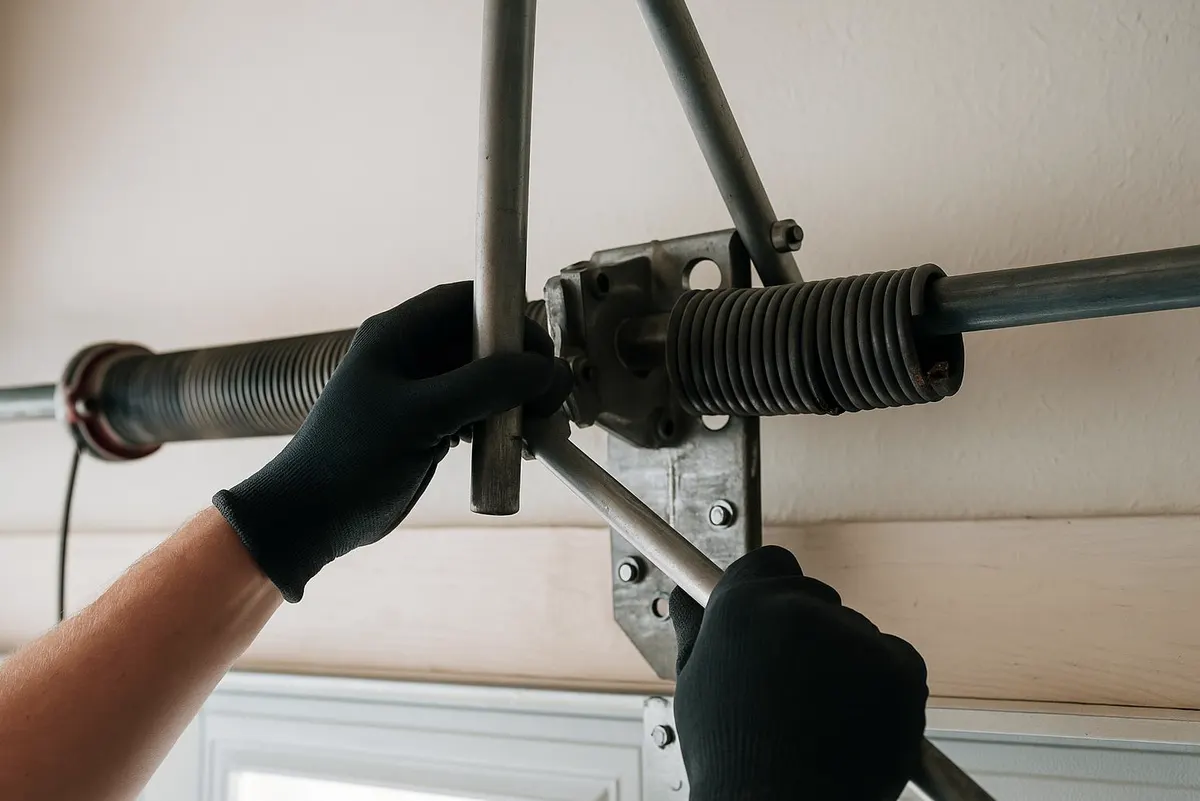
The Mistake: Grabbing the Spray Can and Calling It Fixed
Here's how the argument usually starts. The garage door groans, scrapes, or jerks on the way up, and one person in the house reaches for a can of WD-40, gives the track a quick spray, and announces the problem solved. It's an easy call to make. The noise does quiet down for a week or two, the door still opens, and nobody wants to pay for a repair call over a sound. But lubricant only treats the symptom. If the real cause is a frayed cable or a worn-out roller, you've just bought yourself a quieter version of the same failure, happening a little further down the road.
What Rollers and Cables Are Actually Doing
The rollers are the small wheels riding inside the metal tracks on either side of the door. They carry the weight of every panel as the door travels up and down, and they're usually made of nylon, steel, or a nylon-and-ball-bearing combo. The cables are the thin steel wires running from the bottom corners of the door up to the spring system. They're under constant tension, and they're doing the actual work of lifting the door in partnership with the springs — the opener just provides the push.
Neither part is supposed to make noise when it's healthy. A smooth roller glides quietly. A sound cable stays taut and silent. Noise from either one is a wear signal, not background chatter.
What Worn Rollers Sound and Look Like
- Rhythmic rumbling or clunking that gets louder as the door moves, especially near the top or bottom of travel.
- Flat spots on a roller you can see by hand-turning it — a healthy roller spins evenly, a worn one has a dull side.
- Cracked or chipped nylon, which is common after a few winters of temperature swings. Nylon gets brittle in the cold and can split without warning.
- The door riding unevenly in the track, sometimes catching or jumping slightly as it passes a bad roller.
What a Frayed Cable Looks Like
- Visible broken strands near the bottom bracket or where the cable wraps around the drum at the top — it looks like a tiny wire broom instead of a smooth braid.
- Rust streaks on the cable or the track below it, often from road salt spray tracked in on tires or carried in on winter boots and gear.
- The door hanging crooked, with one side noticeably lower than the other. This is one of the clearest signs a cable is stretching or about to let go.
- A popping or snapping sound during operation, which can mean a strand has already failed.
Why This Shows Up More in Northeast Ohio
The area's weather is hard on both parts. Cold winters with ice and road salt mean moisture and grit get into the tracks and onto the cables all season, which accelerates rust and fraying. Nylon rollers that were fine in October can turn brittle and crack once temperatures drop and stay low. Then spring brings its own stress — storm season and sudden swings from freezing nights to warm, humid days make metal expand and contract, which is exactly the kind of repeated flexing that turns a small nick in a cable into a full fray over a season or two.
Why This Isn't a DIY Repair
Here's the part worth settling once and for all: cables are under spring tension, and garage door springs store enough force to cause serious injury if they let go while someone is working near them. Rollers are a simpler fix on paper, but getting to them often means working near that same tensioned cable system. Tightening a bolt or oiling a hinge is reasonable homeowner maintenance. Replacing a cable or swapping out rollers near the bottom brackets is not — it's a job that calls for the right tools and the training to release tension safely.
The safe move for a homeowner is to look, not touch: check for fraying, rust, flat spots, and an uneven door, then get a professional to handle anything involving the cable or spring system.
When to Call Windham Garage Door
If you've spotted frayed strands, a door that hangs crooked, or rollers with visible wear, it's time to call before the part fails on its own schedule instead of yours. Windham Garage Door handles both garage door repair and spring replacement, and a technician can inspect the cables, drums, and rollers together, since a worn roller often puts extra strain on the cable next to it. Catching it during a scheduled repair is a lot less dramatic than catching it when the door won't open at all, or opens crooked, on a cold morning when you're already late.
If your garage door has been making noise, hanging unevenly, or just hasn't felt right lately, call Windham Garage Door — serving Windham, Garrettsville, Hiram, Mantua, Ravenna, Newton Falls, Shalersville, and Freedom, OH — and get it looked at before the quiet parts cause a loud problem.